개요
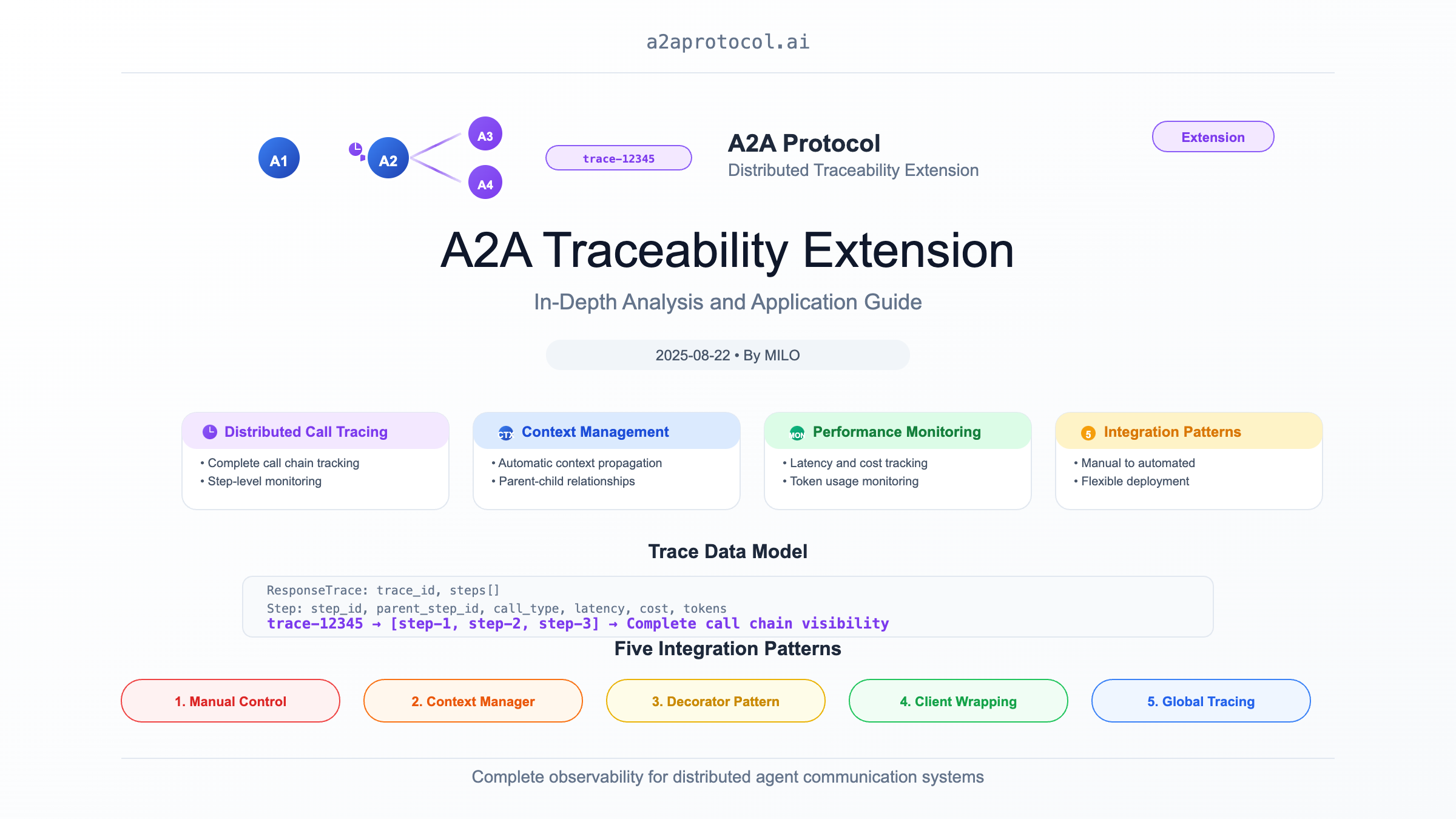
A2A(Agent2Agent) 추적성 확장은 A2A 프레임워크에서 에이전트 간 통신을 위한 완전한 호출 체인 추적을 제공하도록 특별히 설계된 강력한 분산 추적 시스템입니다. 이 확장은 분산 추적 시스템(Jaeger, Zipkin 등)과 유사한 기능을 구현하지만, 멀티 에이전트 시스템의 특정 요구사항에 최적화되어 있습니다.
핵심 기능
1. 분산 호출 추적
- 완전한 호출 체인: 에이전트 간의 완전한 호출 경로와 종속성을 기록
- 단계별 모니터링: 각 작업 단계의 세부 정보를 추적
- 중첩된 추적: 복잡한 중첩 호출 및 재귀 시나리오 지원
- 성능 모니터링: 지연 시간, 비용, 토큰 사용량 등 주요 메트릭 수집
2. 지능적 컨텍스트 관리
- 자동 컨텍스트 전파: 에이전트 호출 체인을 통해 추적 컨텍스트를 자동으로 전달
- 부모-자식 관계 유지: 호출의 계층 구조를 정확히 기록
- 오류 전파: 호출 체인을 통한 오류 전파 경로 추적
3. 다양한 통합 접근법
- 컨텍스트 매니저:
TraceStep으로 추적 코드 간소화 - 데코레이터 패턴: 투명한 추적 기능 통합 제공
- 수동 제어: 추적 생명주기의 완전한 제어
설계 원칙
아키텍처 패턴
이 확장은 현대 분산 추적 시스템의 핵심 설계 패턴을 채택합니다:
-
계층화된 추적 모델:
- 트레이스: 완전한 비즈니스 작업을 나타냄
- 단계: 트레이스 내의 개별 작업 단위
- 컨텍스트: 호출 체인을 통해 전달되는 추적 정보
-
옵저버 패턴: 컨텍스트 매니저를 통해 추적 데이터를 자동으로 수집
-
전략 패턴: 다양한 추적 전략과 구성 지원
데이터 모델
ResponseTrace
class ResponseTrace:
    trace_id: str          # 고유한 트레이스 식별자
    steps: List[Step]      # 트레이스 단계 목록
Step
class Step:
    step_id: str           # 고유한 단계 식별자
    trace_id: str          # 소속 트레이스 ID
    parent_step_id: str    # 부모 단계 ID
    call_type: CallTypeEnum # 호출 유형 (AGENT/TOOL/HOST)
    start_time: datetime   # 시작 시간
    end_time: datetime     # 종료 시간
    latency: int          # 지연 시간 (밀리초)
    cost: float           # 작업 비용
    total_tokens: int     # 토큰 사용량
    error: Any            # 오류 정보
해결되는 핵심 문제
1. 멀티 에이전트 시스템의 관찰 가능성
복잡한 멀티 에이전트 시스템에서 사용자 요청이 여러 에이전트의 협력을 유발할 수 있습니다:
사용자 요청 -> 코디네이터 에이전트 -> 데이터 에이전트 -> 분석 에이전트 -> 결정 에이전트 -> 실행 에이전트
추적 없이의 문제점:
- 시스템을 통한 요청의 완전한 흐름 경로를 이해할 수 없음
- 성능 병목점과 실패 지점을 찾기 어려움
- 엔드투엔드 성능 모니터링 부족
- 효과적인 시스템 최적화를 수행할 수 없음
2. 에이전트 호출의 비용 및 성능 모니터링
현대 AI 에이전트는 일반적으로 비싼 LLM 호출을 포함합니다:
# 추적 없이는 다음 질문에 답할 수 없습니다:
# - 이 대화의 총 비용은 얼마였나요?
# - 어떤 에이전트가 가장 많은 토큰을 소비했나요?
# - 성능 병목점은 어디에 있나요?
user_query -> agent_a -> llm_call(cost=$0.05, tokens=1000)
           -> agent_b -> llm_call(cost=$0.08, tokens=1500)
           -> agent_c -> tool_call(latency=2000ms)
3. 오류 전파 및 장애 진단
에이전트 체인에서 오류가 발생할 때 신속한 문제 위치 파악이 필요합니다:
# 추적을 통해 명확히 확인할 수 있습니다:
Trace ID: trace-12345
├── Step 1: UserQuery (success, 10ms)
├── Step 2: DataAgent (success, 200ms, $0.05)
├── Step 3: AnalysisAgent (failed, 1500ms, error: "API timeout")
└── Step 4: DecisionAgent (skipped due to upstream failure)
4. 비즈니스 프로세스 최적화
추적 데이터를 통한 비즈니스 프로세스 효율성 분석:
# 추적 데이터 분석으로 밝혀진 내용:
# - 지연 시간의 80%가 데이터 에이전트의 데이터베이스 쿼리에서 발생
# - 분석 에이전트의 병렬 처리로 총 시간을 50% 단축 가능
# - 일부 도구 호출을 캐시하여 비용 절감 가능
기술 구현 세부사항
1. 컨텍스트 매니저 패턴
class TraceStep:
    """트레이스 단계 생명주기를 자동으로 관리하는 컨텍스트 매니저"""

    def __enter__(self) -> TraceRecord:
        # 추적 시작, 시작 시간 기록
        return self.step

    def __exit__(self, exc_type, exc_val, exc_tb):
        # 추적 종료, 종료 시간과 오류 정보 기록
        self.step.end_step(error=error_msg)
        if self.response_trace:
            self.response_trace.add_step(self.step)
사용 예시:
with TraceStep(trace, CallTypeEnum.AGENT, name="데이터 쿼리") as step:
    result = await data_agent.query(params)
    step.end_step(cost=0.05, total_tokens=1000)
2. 자동화된 추적 통합
# 투명한 통합, 비즈니스 코드 수정 불필요
original_client = AgentClient()
traced_client = ext.wrap_client(original_client)

# traced_client를 통한 모든 호출이 자동으로 추적됨
response = await traced_client.call_agent(request)
3. 확장 활성화 메커니즘
추적은 HTTP 헤더를 통해 활성화됩니다:
X-A2A-Extensions: https://github.com/a2aproject/a2a-samples/extensions/traceability/v1
5가지 통합 패턴
패턴 1: 완전한 수동 제어
개발자가 트레이스 생성과 관리를 완전히 제어:
ext = TraceabilityExtension()
trace = ResponseTrace()
step = TraceRecord(CallTypeEnum.AGENT, name="사용자 쿼리")
# ... 비즈니스 로직 ...
step.end_step(cost=0.1, total_tokens=500)
trace.add_step(step)
사용 사례: 추적 세분성과 내용에 대한 정밀한 제어가 필요한 고급 시나리오
패턴 2: 컨텍스트 매니저
컨텍스트 매니저를 사용하여 추적 코드 간소화:
with TraceStep(trace, CallTypeEnum.TOOL, name="데이터베이스 쿼리") as step:
    result = database.query(sql)
    step.end_step(cost=0.02, additional_attributes={"rows": len(result)})
사용 사례: 특정 코드 블록 내에서의 정밀한 추적
패턴 3: 데코레이터 자동화
데코레이터를 통한 투명한 추적 구현:
@trace_agent_call
async def process_request(request):
    # 모든 에이전트 호출이 자동으로 추적됨
    return await some_agent.process(request)
사용 사례: 최소한의 코드 수정이 필요한 시나리오
패턴 4: 클라이언트 래핑
기존 클라이언트를 래핑하여 추적 기능 추가:
traced_client = ext.wrap_client(original_client)
# 모든 호출이 자동으로 추적 정보를 포함
사용 사례: 기존 시스템과의 비침입적 통합
패턴 5: 글로벌 추적
실행기 수준에서 글로벌 추적 활성화:
traced_executor = ext.wrap_executor(original_executor)
# 실행기를 통한 모든 작업이 추적됨
사용 사례: 시스템 전체의 추적 커버리지가 필요한 프로덕션 환경
실세계 애플리케이션 시나리오
1. 지능형 고객 서비스 시스템 추적
# 완전한 고객 서비스 처리 흐름 추적
with TraceStep(trace, CallTypeEnum.AGENT, "고객 서비스 처리") as main_step:

    # 의도 인식
    with TraceStep(trace, CallTypeEnum.AGENT, "의도 인식", parent_step_id=main_step.step_id) as intent_step:
        intent = await intent_agent.classify(user_message)
        intent_step.end_step(cost=0.02, total_tokens=200)

    # 지식 검색
    with TraceStep(trace, CallTypeEnum.TOOL, "지식 검색", parent_step_id=main_step.step_id) as kb_step:
        knowledge = await knowledge_base.search(intent)
        kb_step.end_step(latency=150, additional_attributes={"results": len(knowledge)})

    # 응답 생성
    with TraceStep(trace, CallTypeEnum.AGENT, "응답 생성", parent_step_id=main_step.step_id) as gen_step:
        response = await response_agent.generate(intent, knowledge)
        gen_step.end_step(cost=0.08, total_tokens=800)

    main_step.end_step(cost=0.10, total_tokens=1000)
2. 금융 위험 제어 시스템 모니터링
# 위험 제어 결정의 완전한 추적 체인
trace = ResponseTrace("위험 평가-" + transaction_id)

with TraceStep(trace, CallTypeEnum.AGENT, "위험 평가") as risk_step:

    # 사용자 프로파일링 분석
    with TraceStep(trace, CallTypeEnum.AGENT, "사용자 프로파일링") as profile_step:
        user_profile = await profile_agent.analyze(user_id)
        profile_step.end_step(cost=0.05, additional_attributes={"risk_score": user_profile.risk})

    # 거래 패턴 분석
    with TraceStep(trace, CallTypeEnum.AGENT, "거래 분석") as pattern_step:
        pattern_analysis = await pattern_agent.analyze(transaction)
        pattern_step.end_step(cost=0.03, additional_attributes={"anomaly_score": pattern_analysis.anomaly})

    # 최종 결정
    decision = risk_engine.decide(user_profile, pattern_analysis)
    risk_step.end_step(
        cost=0.08,
        additional_attributes={
            "decision": decision.action,
            "confidence": decision.confidence
        }
    )
성능 모니터링 및 분석
추적 데이터 분석
def analyze_trace_performance(trace: ResponseTrace):
    """추적 성능 데이터 분석"""

    total_cost = sum(step.cost or 0 for step in trace.steps)
    total_tokens = sum(step.total_tokens or 0 for step in trace.steps)
    total_latency = max(step.end_time for step in trace.steps) - min(step.start_time for step in trace.steps)

    # 성능 병목점 식별
    bottleneck = max(trace.steps, key=lambda s: s.latency or 0)

    # 비용 분석
    cost_by_type = defaultdict(float)
    for step in trace.steps:
        cost_by_type[step.call_type] += step.cost or 0

    return {
        "총 비용": total_cost,
        "총 토큰": total_tokens,
        "총 지연시간": total_latency.total_seconds() * 1000,
        "병목점": f"{bottleneck.name} ({bottleneck.latency}ms)",
        "비용 분포": dict(cost_by_type)
    }
실시간 모니터링 대시보드
class TracingDashboard:
    """실시간 추적 모니터링 대시보드"""

    def __init__(self):
        self.active_traces = {}
        self.completed_traces = []

    def update_trace(self, trace: ResponseTrace):
        """추적 상태 업데이트"""
        self.active_traces[trace.trace_id] = trace

        # 완료 확인
        if self.is_trace_completed(trace):
            self.completed_traces.append(trace)
            del self.active_traces[trace.trace_id]
            self.analyze_completed_trace(trace)

    def get_real_time_metrics(self):
        """실시간 메트릭 가져오기"""
        return {
            "활성 추적": len(self.active_traces),
            "완료된 추적": len(self.completed_traces),
            "평균 지연시간": self.calculate_average_latency(),
            "비용 추세": self.calculate_cost_trend(),
            "오류율": self.calculate_error_rate()
        }
모범 사례
1. 적절한 추적 세분성
# ✅ 좋은 사례: 주요 비즈니스 작업
with TraceStep(trace, CallTypeEnum.AGENT, "주문 처리"):
    process_order(order)

# ❌ 피해야 할 것: 너무 세분화된 추적
with TraceStep(trace, CallTypeEnum.TOOL, "변수 할당"):  # 너무 세분화됨
    x = y + 1
2. 의미있는 단계 명명
# ✅ 명확한 비즈니스 의미
with TraceStep(trace, CallTypeEnum.AGENT, "사용자 인증") as step:

# ✅ 주요 매개변수 포함
with TraceStep(trace, CallTypeEnum.TOOL, f"데이터베이스 쿼리-{table_name}") as step:

# ❌ 기술 구현 세부사항
with TraceStep(trace, CallTypeEnum.TOOL, "SQL SELECT 문 실행") as step:
3. 적절한 오류 처리
with TraceStep(trace, CallTypeEnum.AGENT, "외부 API 호출") as step:
    try:
        result = await external_api.call()
        step.end_step(
            cost=calculate_cost(result),
            additional_attributes={"status": "success"}
        )
    except ApiException as e:
        step.end_step(
            error=str(e),
            additional_attributes={"status": "failed", "error_code": e.code}
        )
        raise
4. 민감한 정보 보호
# ✅ 안전한 매개변수 기록
with TraceStep(trace, CallTypeEnum.AGENT, "사용자 인증",
               parameters={"user_id": user.id}) as step:  # ID만 기록

# ❌ 민감한 정보 기록 피하기
with TraceStep(trace, CallTypeEnum.AGENT, "사용자 인증",
               parameters={"password": user.password}) as step:  # 위험!
다른 시스템과의 통합
1. 로깅 시스템 통합
import logging

class TracingLogHandler(logging.Handler):
    """추적 정보를 로깅 시스템에 통합"""

    def emit(self, record):
        if hasattr(record, 'trace_id'):
            record.msg = f"[trace:{record.trace_id}] {record.msg}"
        super().emit(record)
2. 모니터링 시스템 통합
class PrometheusTraceExporter:
    """추적 메트릭을 Prometheus로 내보내기"""

    def export_trace(self, trace: ResponseTrace):
        # 지연시간 메트릭 내보내기
        latency_histogram.observe(trace.total_latency)

        # 비용 메트릭 내보내기
        cost_gauge.set(trace.total_cost)

        # 오류율 내보내기
        if trace.has_errors:
            error_counter.inc()
요약
A2A 추적성 확장은 멀티 에이전트 시스템에 엔터프라이즈급 분산 추적 기능을 제공하여 복잡한 에이전트 네트워크에서의 관찰 가능성 문제를 해결합니다. 기술적 구현을 제공할 뿐만 아니라, 더 중요하게는 멀티 에이전트 시스템의 모니터링과 최적화를 위한 표준 패턴을 확립합니다.
핵심 가치:
- 완전한 가시성: 에이전트 호출 체인의 엔드투엔드 가시성 제공
- 성능 최적화: 상세한 성능 데이터를 통한 시스템 최적화 지원
- 장애 진단: 분산 시스템에서 문제를 신속히 찾아내고 해결
- 비용 제어: AI 에이전트 사용 비용을 정확히 추적하고 최적화
설계상의 장점:
- 유연한 통합: 수동부터 자동까지 다양한 통합 접근법
- 표준화: 분산 추적의 업계 표준을 따름
- 고성능: 비즈니스 코드에 최소한의 성능 영향
- 확장 가능: 사용자 정의 속성과 확장 기능 지원
이 확장은 신뢰할 수 있고, 모니터링 가능하며, 최적화 가능한 멀티 에이전트 시스템을 구축하기 위한 견고한 기반을 제공하며, 현대 AI 시스템 엔지니어링 실천의 중요한 구성 요소로 작용합니다.
기타 확장
Featured Products
Tools and services from the A2A ecosystem directory.
Create images, videos, voiceovers and music with AI Kenerate. Turn text and photos into creative content with AI tools and an agent in one workspace.
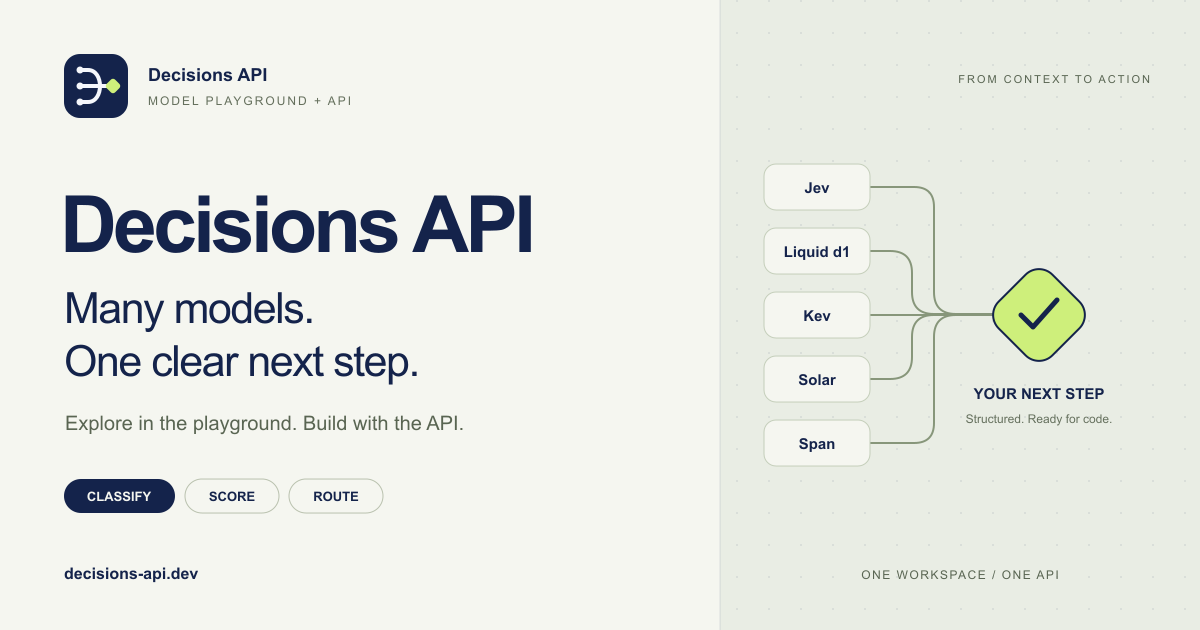
Decisions API brings multiple AI decision models into one workflow for classifying, scoring, routing, and evaluating text with structured outputs.
Build smarter AI workflows with a unified API for classification, scoring, routing, verification, and other structured decisions.
Try Jev AI Model online for free after sign in. Classify, score, and route text with structured results. Buy credits for API access.
Turn any flat image into named, editable layers—separate text, subjects, decorations, and backgrounds in just a few clicks.
Related Articles
Explore more content related to this topic
Agent Gateway Protocol (AGP): Practical Tutorial and Specification
Learn the Agent Gateway Protocol (AGP): what it is, problems it solves, core spec (capability announcements, intent payloads, routing and error codes), routing algorithm, and how to run a working simulation.
A2A Protocol Extension: Secure Passport Complete Guide
The Secure Passport Extension introduces a trusted context layer to the Agent2Agent (A2A) protocol, enabling calling agents to securely and voluntarily share a structured subset of their current context state with called agents. This extension aims to transform anonymous, transactional calls into collaborative partnerships.
A2A Timestamp Extension: In-Depth Analysis and Application Guide
A2A timestamp extension analysis and application guide
A2UI Introduction - Declarative UI Protocol for Agent-Driven Interfaces
Discover A2UI, the declarative UI protocol that enables AI agents to generate rich, interactive user interfaces. Learn how A2UI works, who it's for, how to use it, and see real-world examples from Google Opal, Gemini Enterprise, and Flutter GenUI SDK.
Integrating A2A Protocol - Intelligent Agent Communication Solution for BeeAI Framework
Using A2A protocol instead of ACP is a better choice for BeeAI, reducing protocol fragmentation and improving ecosystem integration.