概要
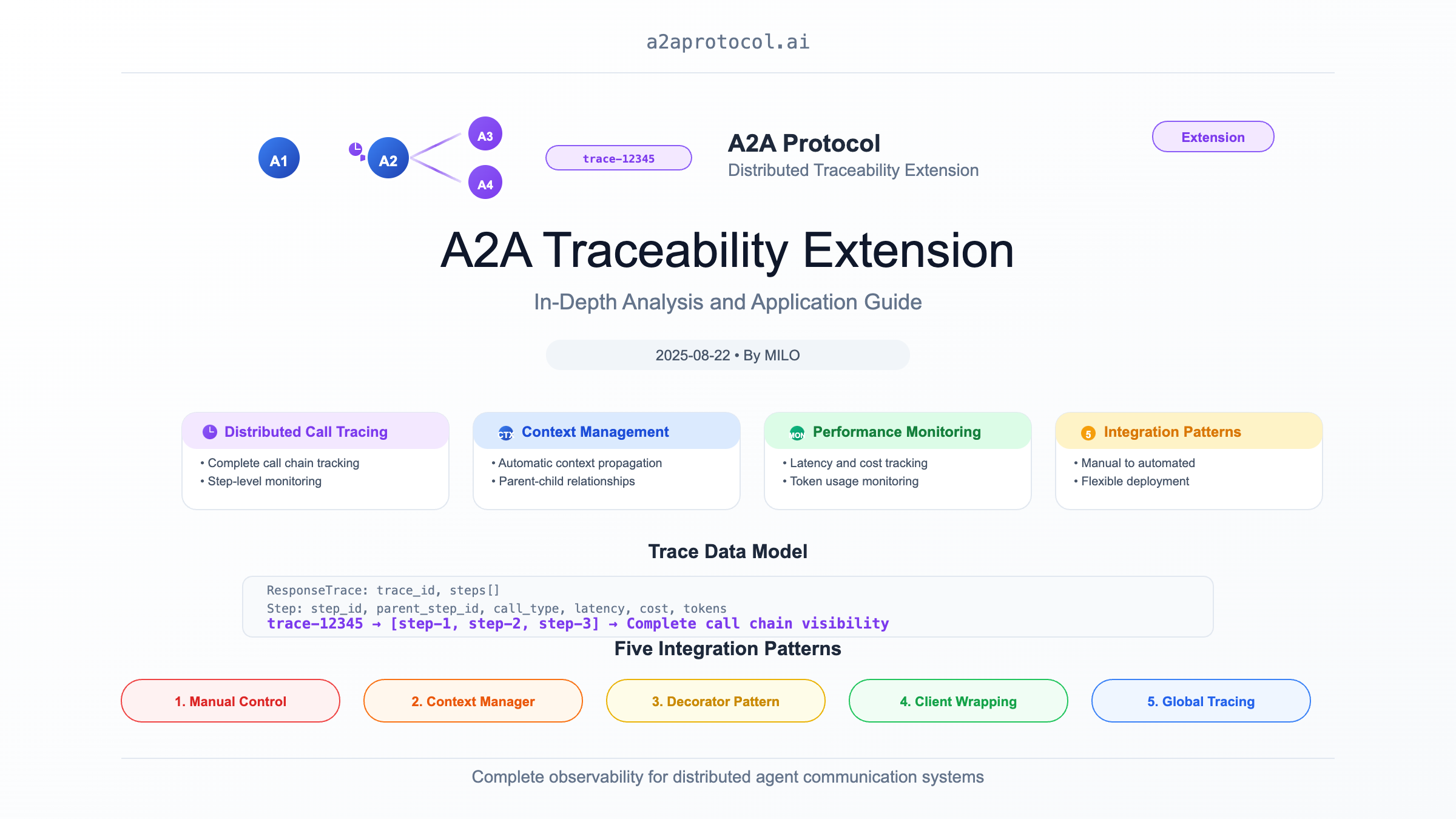
A2A(Agent2Agent)トレーサビリティ拡張機能は、A2Aフレームワークにおけるエージェント間通信の完全なコールチェーントレーシングを提供するために特別に設計された強力な分散トレーシングシステムです。この拡張機能は、分散トレーシングシステム(Jaeger、Zipkin など)と同様の機能を実装していますが、マルチエージェントシステムの特定のニーズに最適化されています。
主要機能
1. 分散コールトレーシング
- 完全なコールチェーン:エージェント間の完全なコールパスと依存関係を記録
- ステップレベルの監視:各操作ステップの詳細情報を追跡
- ネストされたトレーシング:複雑なネストされたコールと再帰的なシナリオをサポート
- パフォーマンス監視:レイテンシ、コスト、トークン使用量などの主要メトリクスを収集
2. インテリジェントなコンテキスト管理
- 自動コンテキスト伝播:エージェントコールチェーンを通じてトレーシングコンテキストを自動的に渡す
- 親子関係の維持:コールの階層構造を正確に記録
- エラー伝播:コールチェーンを通じてエラー伝播パスを追跡
3. 多様な統合アプローチ
- コンテキストマネージャー:
TraceStepでトレーシングコードを簡素化 - デコレーターパターン:透明なトレーシング機能統合を提供
- 手動制御:トレーシングライフサイクルの完全な制御
設計原則
アーキテクチャパターン
この拡張機能は、現代の分散トレーシングシステムのコア設計パターンを採用しています:
-
階層化トレーシングモデル:
- トレース:完全なビジネス操作を表す
- ステップ:トレース内の個別の操作単位
- コンテキスト:コールチェーンを通じて渡されるトレーシング情報
-
オブザーバーパターン:コンテキストマネージャーを通じてトレーシングデータを自動的に収集
-
ストラテジーパターン:異なるトレーシング戦略と設定をサポート
データモデル
ResponseTrace
class ResponseTrace:
    trace_id: str          # 一意のトレース識別子
    steps: List[Step]      # トレースステップのリスト
Step
class Step:
    step_id: str           # 一意のステップ識別子
    trace_id: str          # 所属するトレースID
    parent_step_id: str    # 親ステップID
    call_type: CallTypeEnum # コールタイプ(AGENT/TOOL/HOST)
    start_time: datetime   # 開始時間
    end_time: datetime     # 終了時間
    latency: int          # レイテンシ(ミリ秒)
    cost: float           # 操作コスト
    total_tokens: int     # トークン使用量
    error: Any            # エラー情報
解決される主要な問題
1. マルチエージェントシステムの可観測性
複雑なマルチエージェントシステムでは、ユーザーリクエストが複数のエージェントの協力を引き起こす可能性があります:
ユーザーリクエスト -> コーディネーターエージェント -> データエージェント -> 分析エージェント -> 決定エージェント -> 実行エージェント
トレーシングなしの問題:
- システムを通じたリクエストの完全なフローパスを理解できない
- パフォーマンスのボトルネックと障害ポイントの特定が困難
- エンドツーエンドのパフォーマンス監視の欠如
- 効果的なシステム最適化を実行できない
2. エージェントコールのコストとパフォーマンス監視
現代の AI エージェントは通常、高価な LLM コールを含みます:
# トレーシングなしでは、以下の質問に答えられません:
# - この会話の総コストはいくらでしたか?
# - どのエージェントが最も多くのトークンを消費しましたか?
# - パフォーマンスのボトルネックはどこにありますか?
user_query -> agent_a -> llm_call(cost=$0.05, tokens=1000)
           -> agent_b -> llm_call(cost=$0.08, tokens=1500)
           -> agent_c -> tool_call(latency=2000ms)
3. エラー伝播と障害診断
エージェントチェーンでエラーが発生した場合、迅速な問題の特定が必要です:
# トレーシングにより、明確に確認できます:
Trace ID: trace-12345
├── Step 1: UserQuery (success, 10ms)
├── Step 2: DataAgent (success, 200ms, $0.05)
├── Step 3: AnalysisAgent (failed, 1500ms, error: "API timeout")
└── Step 4: DecisionAgent (skipped due to upstream failure)
4. ビジネスプロセスの最適化
トレーシングデータを通じてビジネスプロセスの効率を分析:
# トレーシングデータの分析により判明:
# - レイテンシの80%はデータエージェントのデータベースクエリに起因
# - 分析エージェントでの並列処理により総時間を50%削減可能
# - 一部のツールコールはキャッシュしてコストを削減可能
技術実装の詳細
1. コンテキストマネージャーパターン
class TraceStep:
    """トレースステップのライフサイクルを自動的に管理するコンテキストマネージャー"""

    def __enter__(self) -> TraceRecord:
        # トレーシング開始、開始時間を記録
        return self.step

    def __exit__(self, exc_type, exc_val, exc_tb):
        # トレーシング終了、終了時間とエラー情報を記録
        self.step.end_step(error=error_msg)
        if self.response_trace:
            self.response_trace.add_step(self.step)
使用例:
with TraceStep(trace, CallTypeEnum.AGENT, name="データクエリ") as step:
    result = await data_agent.query(params)
    step.end_step(cost=0.05, total_tokens=1000)
2. 自動化されたトレーシング統合
# 透明な統合、ビジネスコードを変更する必要なし
original_client = AgentClient()
traced_client = ext.wrap_client(original_client)

# traced_clientを通じたすべてのコールが自動的にトレースされる
response = await traced_client.call_agent(request)
3. 拡張機能の有効化メカニズム
トレーシングは HTTP ヘッダーを通じて有効化されます:
X-A2A-Extensions: https://github.com/a2aproject/a2a-samples/extensions/traceability/v1
5 つの統合パターン
パターン 1:完全手動制御
開発者がトレースの作成と管理を完全に制御:
ext = TraceabilityExtension()
trace = ResponseTrace()
step = TraceRecord(CallTypeEnum.AGENT, name="ユーザークエリ")
# ... ビジネスロジック ...
step.end_step(cost=0.1, total_tokens=500)
trace.add_step(step)
使用ケース:トレーシングの粒度と内容の精密な制御が必要な高度なシナリオ
パターン 2:コンテキストマネージャー
コンテキストマネージャーを使用してトレーシングコードを簡素化:
with TraceStep(trace, CallTypeEnum.TOOL, name="データベースクエリ") as step:
    result = database.query(sql)
    step.end_step(cost=0.02, additional_attributes={"rows": len(result)})
使用ケース:特定のコードブロック内での精密なトレーシング
パターン 3:デコレーター自動化
デコレーターを通じて透明なトレーシングを実装:
@trace_agent_call
async def process_request(request):
    # すべてのエージェントコールが自動的にトレースされる
    return await some_agent.process(request)
使用ケース:最小限のコード変更が必要なシナリオ
パターン 4:クライアントラッピング
既存のクライアントをラップしてトレーシング機能を追加:
traced_client = ext.wrap_client(original_client)
# すべてのコールが自動的にトレーシング情報を含む
使用ケース:既存システムとの非侵襲的統合
パターン 5:グローバルトレーシング
エグゼキューターレベルでグローバルトレーシングを有効化:
traced_executor = ext.wrap_executor(original_executor)
# エグゼキューターを通じたすべての操作がトレースされる
使用ケース:システム全体のトレーシングカバレッジが必要な本番環境
実世界のアプリケーションシナリオ
1. インテリジェントカスタマーサービスシステムのトレーシング
# 完全なカスタマーサービス処理フローのトレーシング
with TraceStep(trace, CallTypeEnum.AGENT, "カスタマーサービス処理") as main_step:

    # 意図認識
    with TraceStep(trace, CallTypeEnum.AGENT, "意図認識", parent_step_id=main_step.step_id) as intent_step:
        intent = await intent_agent.classify(user_message)
        intent_step.end_step(cost=0.02, total_tokens=200)

    # 知識検索
    with TraceStep(trace, CallTypeEnum.TOOL, "知識検索", parent_step_id=main_step.step_id) as kb_step:
        knowledge = await knowledge_base.search(intent)
        kb_step.end_step(latency=150, additional_attributes={"results": len(knowledge)})

    # 応答生成
    with TraceStep(trace, CallTypeEnum.AGENT, "応答生成", parent_step_id=main_step.step_id) as gen_step:
        response = await response_agent.generate(intent, knowledge)
        gen_step.end_step(cost=0.08, total_tokens=800)

    main_step.end_step(cost=0.10, total_tokens=1000)
2. 金融リスクコントロールシステムの監視
# リスクコントロール決定の完全なトレーシングチェーン
trace = ResponseTrace("リスク評価-" + transaction_id)

with TraceStep(trace, CallTypeEnum.AGENT, "リスク評価") as risk_step:

    # ユーザープロファイリング分析
    with TraceStep(trace, CallTypeEnum.AGENT, "ユーザープロファイリング") as profile_step:
        user_profile = await profile_agent.analyze(user_id)
        profile_step.end_step(cost=0.05, additional_attributes={"risk_score": user_profile.risk})

    # 取引パターン分析
    with TraceStep(trace, CallTypeEnum.AGENT, "取引分析") as pattern_step:
        pattern_analysis = await pattern_agent.analyze(transaction)
        pattern_step.end_step(cost=0.03, additional_attributes={"anomaly_score": pattern_analysis.anomaly})

    # 最終決定
    decision = risk_engine.decide(user_profile, pattern_analysis)
    risk_step.end_step(
        cost=0.08,
        additional_attributes={
            "decision": decision.action,
            "confidence": decision.confidence
        }
    )
パフォーマンス監視と分析
トレースデータ分析
def analyze_trace_performance(trace: ResponseTrace):
    """トレースパフォーマンスデータを分析"""

    total_cost = sum(step.cost or 0 for step in trace.steps)
    total_tokens = sum(step.total_tokens or 0 for step in trace.steps)
    total_latency = max(step.end_time for step in trace.steps) - min(step.start_time for step in trace.steps)

    # パフォーマンスボトルネックの特定
    bottleneck = max(trace.steps, key=lambda s: s.latency or 0)

    # コスト分析
    cost_by_type = defaultdict(float)
    for step in trace.steps:
        cost_by_type[step.call_type] += step.cost or 0

    return {
        "総コスト": total_cost,
        "総トークン": total_tokens,
        "総レイテンシ": total_latency.total_seconds() * 1000,
        "ボトルネック": f"{bottleneck.name} ({bottleneck.latency}ms)",
        "コスト分布": dict(cost_by_type)
    }
リアルタイム監視ダッシュボード
class TracingDashboard:
    """リアルタイムトレーシング監視ダッシュボード"""

    def __init__(self):
        self.active_traces = {}
        self.completed_traces = []

    def update_trace(self, trace: ResponseTrace):
        """トレースステータスを更新"""
        self.active_traces[trace.trace_id] = trace

        # 完了チェック
        if self.is_trace_completed(trace):
            self.completed_traces.append(trace)
            del self.active_traces[trace.trace_id]
            self.analyze_completed_trace(trace)

    def get_real_time_metrics(self):
        """リアルタイムメトリクスを取得"""
        return {
            "アクティブトレース": len(self.active_traces),
            "完了トレース": len(self.completed_traces),
            "平均レイテンシ": self.calculate_average_latency(),
            "コストトレンド": self.calculate_cost_trend(),
            "エラー率": self.calculate_error_rate()
        }
ベストプラクティス
1. 適切なトレーシング粒度
# ✅ 良い実践:主要なビジネス操作
with TraceStep(trace, CallTypeEnum.AGENT, "注文処理"):
    process_order(order)

# ❌ 避けるべき:細かすぎるトレーシング
with TraceStep(trace, CallTypeEnum.TOOL, "変数代入"):  # 細かすぎる
    x = y + 1
2. 意味のあるステップ命名
# ✅ 明確なビジネスセマンティクス
with TraceStep(trace, CallTypeEnum.AGENT, "ユーザー認証") as step:

# ✅ 主要パラメータを含める
with TraceStep(trace, CallTypeEnum.TOOL, f"データベースクエリ-{table_name}") as step:

# ❌ 技術実装の詳細
with TraceStep(trace, CallTypeEnum.TOOL, "SQL SELECT文実行") as step:
3. 適切なエラーハンドリング
with TraceStep(trace, CallTypeEnum.AGENT, "外部API呼び出し") as step:
    try:
        result = await external_api.call()
        step.end_step(
            cost=calculate_cost(result),
            additional_attributes={"status": "success"}
        )
    except ApiException as e:
        step.end_step(
            error=str(e),
            additional_attributes={"status": "failed", "error_code": e.code}
        )
        raise
4. 機密情報の保護
# ✅ 安全なパラメータ記録
with TraceStep(trace, CallTypeEnum.AGENT, "ユーザー認証",
               parameters={"user_id": user.id}) as step:  # IDのみ記録

# ❌ 機密情報の記録を避ける
with TraceStep(trace, CallTypeEnum.AGENT, "ユーザー認証",
               parameters={"password": user.password}) as step:  # 危険!
他システムとの統合
1. ロギングシステム統合
import logging

class TracingLogHandler(logging.Handler):
    """トレーシング情報をロギングシステムに統合"""

    def emit(self, record):
        if hasattr(record, 'trace_id'):
            record.msg = f"[trace:{record.trace_id}] {record.msg}"
        super().emit(record)
2. 監視システム統合
class PrometheusTraceExporter:
    """トレースメトリクスをPrometheusにエクスポート"""

    def export_trace(self, trace: ResponseTrace):
        # レイテンシメトリクスをエクスポート
        latency_histogram.observe(trace.total_latency)

        # コストメトリクスをエクスポート
        cost_gauge.set(trace.total_cost)

        # エラー率をエクスポート
        if trace.has_errors:
            error_counter.inc()
まとめ
A2Aトレーサビリティ拡張機能は、マルチエージェントシステムにエンタープライズレベルの分散トレーシング機能を提供し、複雑なエージェントネットワークでの可観測性の課題に対処します。技術的な実装を提供するだけでなく、より重要なことに、マルチエージェントシステムの監視と最適化のための標準パターンを確立します。
コア価値:
- 完全な可視性:エージェントコールチェーンのエンドツーエンドの可視性を提供
- パフォーマンス最適化:詳細なパフォーマンスデータを通じてシステム最適化をサポート
- 障害診断:分散システムでの問題を迅速に特定・解決
- コスト制御:AI エージェントの使用コストを正確に追跡・最適化
設計上の利点:
- 柔軟な統合:手動から自動まで複数の統合アプローチ
- 標準化:分散トレーシングの業界標準に従う
- 高性能:ビジネスコードへの最小限のパフォーマンス影響
- 拡張可能:カスタム属性と拡張機能をサポート
この拡張機能は、信頼性があり、監視可能で、最適化可能なマルチエージェントシステムを構築するための堅実な基盤を提供し、現代の AI システムエンジニアリング実践の重要な構成要素として機能します。
その他の拡張機能
Featured Products
Tools and services from the A2A ecosystem directory.

Create images, videos, voiceovers and music with AI Kenerate. Turn text and photos into creative content with AI tools and an agent in one workspace.
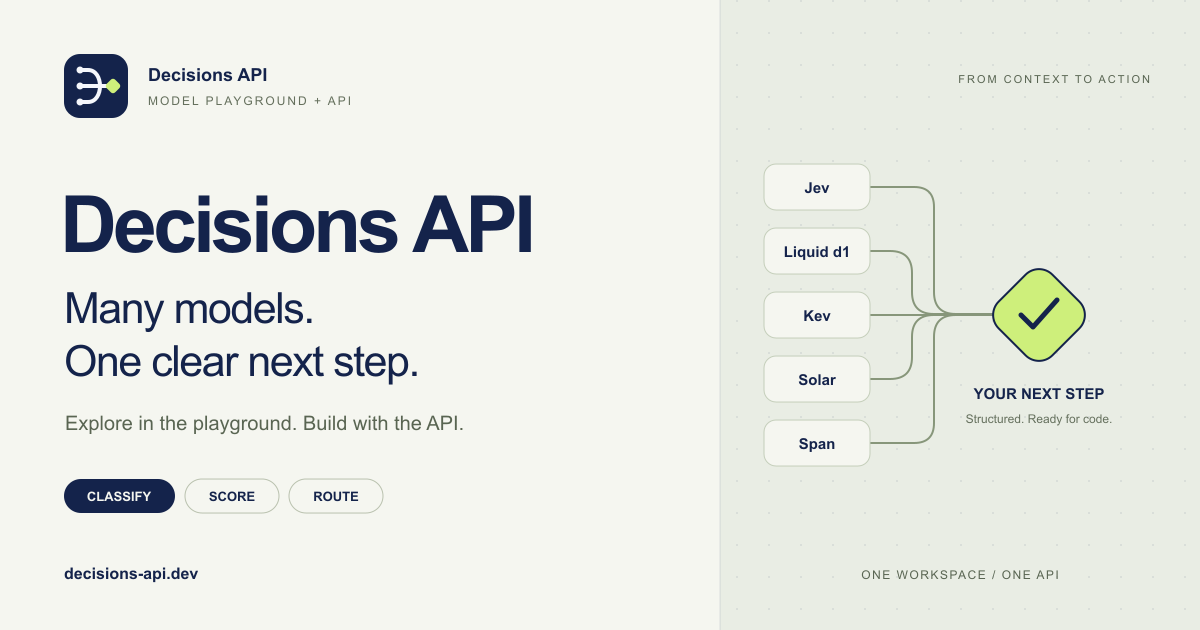
Decisions API brings multiple AI decision models into one workflow for classifying, scoring, routing, and evaluating text with structured outputs.
Build smarter AI workflows with a unified API for classification, scoring, routing, verification, and other structured decisions.
Try Jev AI Model online for free after sign in. Classify, score, and route text with structured results. Buy credits for API access.
Turn any flat image into named, editable layers—separate text, subjects, decorations, and backgrounds in just a few clicks.
Related Articles
Explore more content related to this topic
Agent Gateway Protocol (AGP): Practical Tutorial and Specification
Learn the Agent Gateway Protocol (AGP): what it is, problems it solves, core spec (capability announcements, intent payloads, routing and error codes), routing algorithm, and how to run a working simulation.
A2A Protocol Extension: Secure Passport Complete Guide
The Secure Passport Extension introduces a trusted context layer to the Agent2Agent (A2A) protocol, enabling calling agents to securely and voluntarily share a structured subset of their current context state with called agents. This extension aims to transform anonymous, transactional calls into collaborative partnerships.
A2A Timestamp Extension: In-Depth Analysis and Application Guide
A2A timestamp extension analysis and application guide
A2UI Introduction - Declarative UI Protocol for Agent-Driven Interfaces
Discover A2UI, the declarative UI protocol that enables AI agents to generate rich, interactive user interfaces. Learn how A2UI works, who it's for, how to use it, and see real-world examples from Google Opal, Gemini Enterprise, and Flutter GenUI SDK.
Integrating A2A Protocol - Intelligent Agent Communication Solution for BeeAI Framework
Using A2A protocol instead of ACP is a better choice for BeeAI, reducing protocol fragmentation and improving ecosystem integration.