🎯 Core Points (TL;DR)
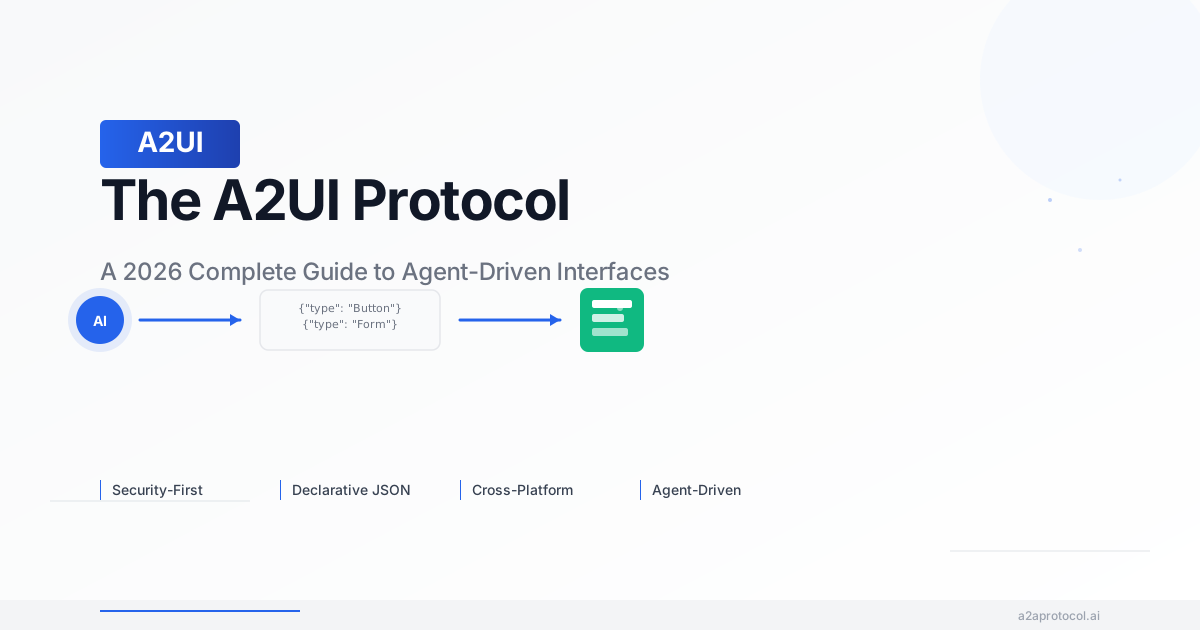
- Security-First Generative UI: A2UI is a declarative, JSON-based protocol that enables AI agents to generate rich, interactive, and safe user interfaces (UIs) across web, mobile, and desktop platforms [1].
- Solving the "Chat Wall": It bridges the gap between conversational AI and structured interaction by allowing agents to request specific UI components (forms, buttons, charts) to gather input or present complex results, moving beyond clunky text-only responses [2].
- Decoupled Architecture: The protocol strictly separates the UI structure (the "what," generated by the agent) from the UI implementation (the "how," controlled by the client's native renderer), ensuring security, brand consistency, and cross-platform portability [1] [5].
Table of Contents
- What is A2UI and Why Does it Matter?
- The Core Philosophy: Security, Decoupling, and Portability
- A2UI in the Agent Ecosystem
- 🤔 Common Questions (FAQ)
- Conclusion and Action Advice
What is A2UI and Why Does it Matter?
Defining the Agent-to-User Interface (A2UI)
The A2UI (Agent-to-User Interface) Protocol is an open-source specification introduced by Google to standardize how AI agents communicate their intent to generate a user interface [1]. It is designed to be a "universal UI language" that agents can "speak" to any client application [3].
Unlike traditional methods where an agent might output raw HTML or rely on a pre-built, static UI, A2UI uses a declarative JSON format to describe the required UI components (e.g., a Card, a TextField, a Button) and the data to populate them [4] [5]. The client application, which hosts the agent, then uses its own native widget set (e.g., React components, Flutter widgets) to render this JSON description [1].
This approach is a critical architectural shift, moving the responsibility of what to display to the agent, while keeping the control over how it is displayed firmly with the client application.
Why Pure Chat Fails: The "Chat Wall" Problem
Agentic systems often excel at generating text, but they quickly hit a limitation known as the "Chat Wall" when the task requires structured input or complex output [2].
For example, an agent tasked with booking a restaurant reservation would typically result in a slow, error-prone text exchange: "What day?" -> "What time?" -> "No availability, try another time?" [1]. This back-and-forth is inefficient and frustrating for the user.
A2UI solves this by allowing the agent to dynamically generate an Action Surface—a simple form with a date picker, time selector, and a submit button—at the exact moment it is needed [2]. This transformation from a purely conversational surface to a structured interaction surface is what defines the next generation of agent-driven applications.
The Core Philosophy: Security, Decoupling, and Portability
The design of A2UI is rooted in three core principles that address the challenges of building multi-agent systems that operate across different platforms and trust boundaries [5].
How A2UI Achieves Security (Data vs. Code)
The most significant innovation of A2UI is its security-first approach, which is essential in a "multi-agent mesh" where agents from different, potentially untrusted, organizations collaborate [1].
Historically, allowing a remote source to render UI meant sending executable code (HTML/JavaScript) and sandboxing it in an iframe, which is visually disjointed and introduces security complexity [1]. A2UI avoids this by being a declarative data format, not executable code [5].
The client application maintains a "catalog" of trusted, pre-approved UI components (e.g., Card, Button, TextField). The agent can only request to render components from this catalog. This mechanism helps to reduce the risk of UI injection and other vulnerabilities, making the agent's output "safe like data, but expressive like code" [1] [4].
The A2UI Interaction Loop: Emit, Render, Signal, Reason
A2UI introduces a dynamic, living interaction loop that moves away from the static request-response model of traditional chat [2]. This loop defines the contract between the agent and the client:
📊 Implementation Flow
graph TD
    A[User Sends Message: Book a table] --> B(Agent Reasoning: Needs structured input);
    B --> C{Emit: A2UI JSON Message};
    C --> D[Renderer Client Receives JSON];
    D --> E[Render: Native UI Form Date Picker];
    E --> F[User Interact: Selects Time Clicks Book];
    F --> G{Signal: Typed userAction Event};
    G --> H[Agent Consumes Event and Reasons];
    H --> C;
    H --> I[Agent Responds with Text or New UI];
- Emit: The Agent sends a JSONL message describing the required UI structure and data bindings.
- Render: The Client's Renderer maps the abstract JSON components to native widgets (e.g., Flutter, React) and displays them.
- Interact: The User interacts with the rendered UI (e.g., clicks a button, fills a form).
- Signal: The Renderer sends the interaction back to the agent as a typed
userActionevent, not free-form text [2]. - Reason: The Agent consumes the structured event and updates the UI accordingly, restarting the loop.
A2UI vs. HTML/iFrames: A Trust Boundary Comparison
The fundamental difference between A2UI and older methods of remote UI rendering lies in the trust boundary and control [3].
| Feature | A2UI Protocol | HTML/iFrames |
|---|---|---|
| Data Format | Declarative JSON/JSONL | Imperative HTML + CSS + JavaScript |
| Security | High: Only pre-approved components allowed, no arbitrary code execution [1] | Low: Essentially remote code execution, relies on sandboxing (iFrame) [3] |
| Cross-Platform | High: Same JSON can be natively rendered on Web, Mobile, Desktop [5] | Low: Depends on browser engine, difficult to achieve native look and feel [1] |
| Style Control | Fully controlled by client: Ensures brand consistency [1] | Hard to control: iFrame content often visually disconnected from host app [1] |
| LLM-Friendly | High: Simple JSONL structure, easy for LLMs to generate incrementally [5] | Low: Difficult to generate complex, error-free HTML/CSS/JS [3] |
A2UI in the Agent Ecosystem
A2UI is not intended to replace existing agent frameworks but to serve as a specialized protocol for interoperable, generative UI responses [1]. It fits into a broader ecosystem of agent communication standards.
A2UI and AG-UI: Complementary Layers
The Agent-User Interaction Protocol (AG-UI), developed by CopilotKit, is often discussed alongside A2UI. They are complementary layers, not competing technologies [4].
- A2UI (UI Specification): Defines the content—the structured data that describes the UI components and their layout.
- AG-UI (Transport Protocol): Defines the runtime—the lightweight, event-based protocol that handles the bi-directional, real-time communication, transporting the A2UI messages and user actions between the agent and the frontend [4].
In practice, an agent might use A2UI to describe the UI intent, and AG-UI to stream that intent to the client and receive the user's structured response back [4].
Real-World Experience: Building Custom Renderers
Experience (E): Developers are already adopting A2UI's core pattern. Even before official support for all frameworks, the concept of a declarative, agent-generated UI is proving valuable.
💡 Pro Tip
A2UI's Extensibility: The protocol's design allows for custom components. If a client needs a specialized widget (e.g., a custom chart or a Google Maps component), the agent can request it, provided the client has registered that component in its trusted catalog [1]. This is crucial for enterprise applications.
One developer, for instance, implemented a custom React renderer based on the A2UI pattern to fix their AI Shopping Agent, LogiCart [6]. The agent dynamically switches the UI based on user intent: a "Product Search" intent renders a Comparison Table, while a "DIY Project" intent renders an interactive Timeline/Checklist [6]. This real-world application demonstrates the power of the agent deciding the interface structure on the fly.
⚠️ Note
UX Consistency Challenge: A key concern raised by the developer community is maintaining a consistent user experience (UX) when the UI is dynamically generated [4]. If the interface changes drastically with every interaction, users may struggle to learn the application, potentially hindering the development of "expert" users [4]. Developers must ensure their client-side renderers enforce strong design system rules to maintain brand and functional consistency.
🤔 Common Questions (FAQ)
Q: Is A2UI Just Reinventing HTML?
A: No. While A2UI aims to achieve cross-platform UI, its core goal is to solve the problems of trust boundaries and LLM generation [3]. HTML is an imperative language that includes executable code (JavaScript), which poses significant security risks in multi-agent environments. A2UI is a declarative data format (JSON) that only describes the intent of the UI, not the implementation. The client uses its native, trusted components to render it, ensuring security, performance, and native appearance [1] [3].
Q: Does A2UI Replace Existing UI Frameworks Like React or Flutter?
A: No. A2UI is a protocol, not a framework [5]. It is complementary to existing UI frameworks. React, Flutter, Angular, and other frameworks remain the foundation for building client applications and A2UI renderers [1] [5]. A2UI JSON messages are sent to renderers running within these frameworks, and the renderers are responsible for mapping abstract A2UI components to concrete, native or web UI components [5].
Conclusion and Action Advice
The A2UI Protocol represents a significant step forward in the evolution of agentic applications, providing the missing link between powerful LLM reasoning and structured, interactive user experiences. By prioritizing security, decoupling the agent's intent from the client's implementation, and embracing a streamable, LLM-friendly format, A2UI enables developers to move beyond the "Chat Wall" and build truly dynamic, cross-platform agent interfaces.
Action Advice:
- Explore the Specification: Review the official A2UI specification to understand the JSONL message structure and component model [5].
- Experiment with Renderers: If you are building an agentic application, consider implementing a custom renderer for your chosen framework (React, Vue, etc.) to gain practical experience with the Emit-Render-Signal-Reason loop [6].
- Integrate with Transports: Investigate how A2UI integrates with transport protocols like AG-UI or the Agent-to-Agent (A2A) protocol to handle the real-time, bi-directional communication required for dynamic UI updates [4].
References
- [1] Google A2UI Team. "Introducing A2UI: An open project for agent-driven interfaces." Google Developers Blog, Dec 15, 2025.
- [2] #TheGenAIGirl. "A2UI: Understanding Agent-Driven Interfaces." Medium (Google Cloud), Dec 26, 2025.
- [3] makeramen, codethief, et al. "A2UI: A Protocol for Agent-Driven Interfaces." Hacker News Discussion, Dec 16, 2025.
- [4] pfthurley. "Google releases A2UI - How the new spec fits within the generative UI space." Reddit (r/AI_Agents), 18 days ago.
- [5] A2UI.org. "A2UI Protocol v0.8 (Stable)." A2UI Specification.
- [6] Equivalent_Fly_4683. "I implemented Google’s new A2UI (Generative UI) pattern in React to fix my AI Shopping Agent." Reddit (r/SaaS), 15 days ago.
- [7] CopilotKit. "Build with Google's new A2UI Spec: Agent User Interfaces with A2UI + AG-UI." CopilotKit Blog, Dec 17, 2025.
Featured Products
Tools and services from the A2A ecosystem directory.
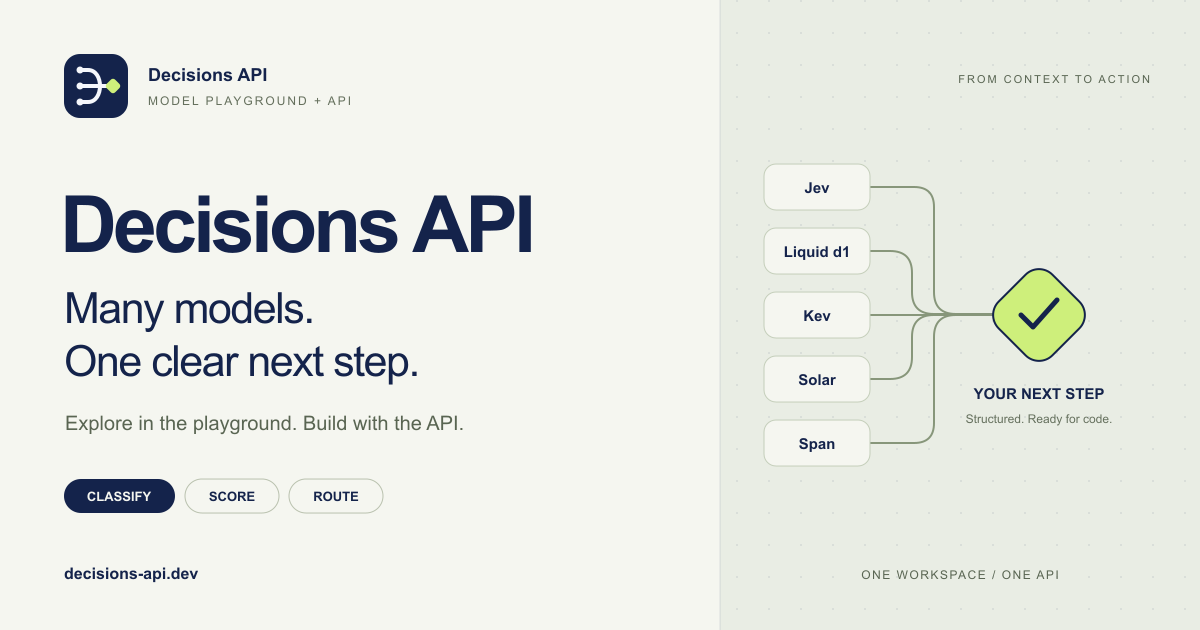
Decisions API brings multiple AI decision models into one workflow for classifying, scoring, routing, and evaluating text with structured outputs.
Build smarter AI workflows with a unified API for classification, scoring, routing, verification, and other structured decisions.
Try Jev AI Model online for free after sign in. Classify, score, and route text with structured results. Buy credits for API access.
Turn any flat image into named, editable layers—separate text, subjects, decorations, and backgrounds in just a few clicks.
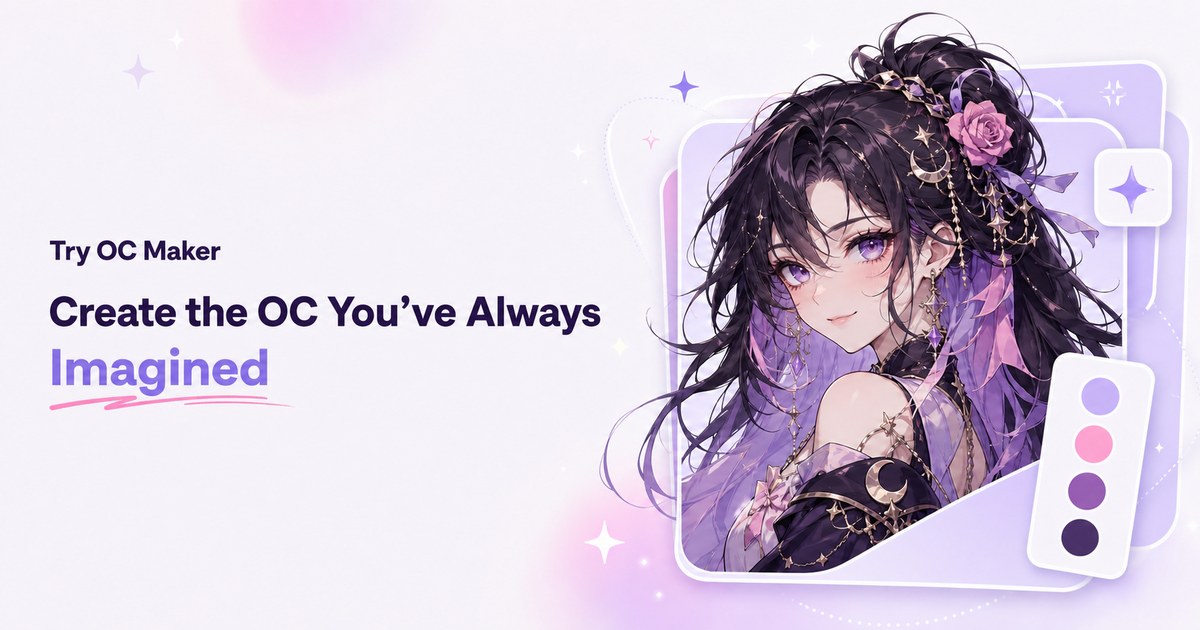
Start with a simple prompt, then let our AI OC Maker turn your idea into anime characters, fantasy OCs, roleplay avatars, and full-body character designs.
Related Articles
Explore more content related to this topic
The Complete Guide to A2UI Protocol: Building Agent-Driven UIs with Google's A2UI in 2025
A comprehensive guide to A2UI (Agent to UI), a declarative UI protocol for agent-driven interfaces. Learn how AI agents generate rich, interactive UIs that render natively across platforms without executing arbitrary code.
A2UI Introduction - Declarative UI Protocol for Agent-Driven Interfaces
Discover A2UI, the declarative UI protocol that enables AI agents to generate rich, interactive user interfaces. Learn how A2UI works, who it's for, how to use it, and see real-world examples from Google Opal, Gemini Enterprise, and Flutter GenUI SDK.
The Complete 2026 Guide: Building Interactive Dashboards with A2UI RizzCharts
Learn how to build AI-powered ecommerce dashboards with A2UI RizzCharts. Understand custom component catalogs, Chart and GoogleMap components, data binding, and integration with Google ADK.
The Complete Developer Tutorial: Building AI Agent UIs with A2UI and A2A Protocol in 2026
Master A2UI and A2A Protocol development with this complete tutorial. Learn to build AI agent UIs, implement renderers, create custom components, and integrate secure multi-agent communication for cross-platform applications.
2026 Complete Guide to GLM-OCR for Next-Gen Document Understanding
GLM-OCR is a 0.9B-parameter multimodal OCR model built on the GLM-V architecture, designed for complex document understanding, not just text extraction. Delivers structure-first outputs (semantic Markdown, JSON, LaTeX), accurately reconstructing tables, formulas, layout, and handwriting across 100+ languages with state-of-the-art OmniDocBench V1.5 performance (94.62) at ~1.86 PDF pages/second.