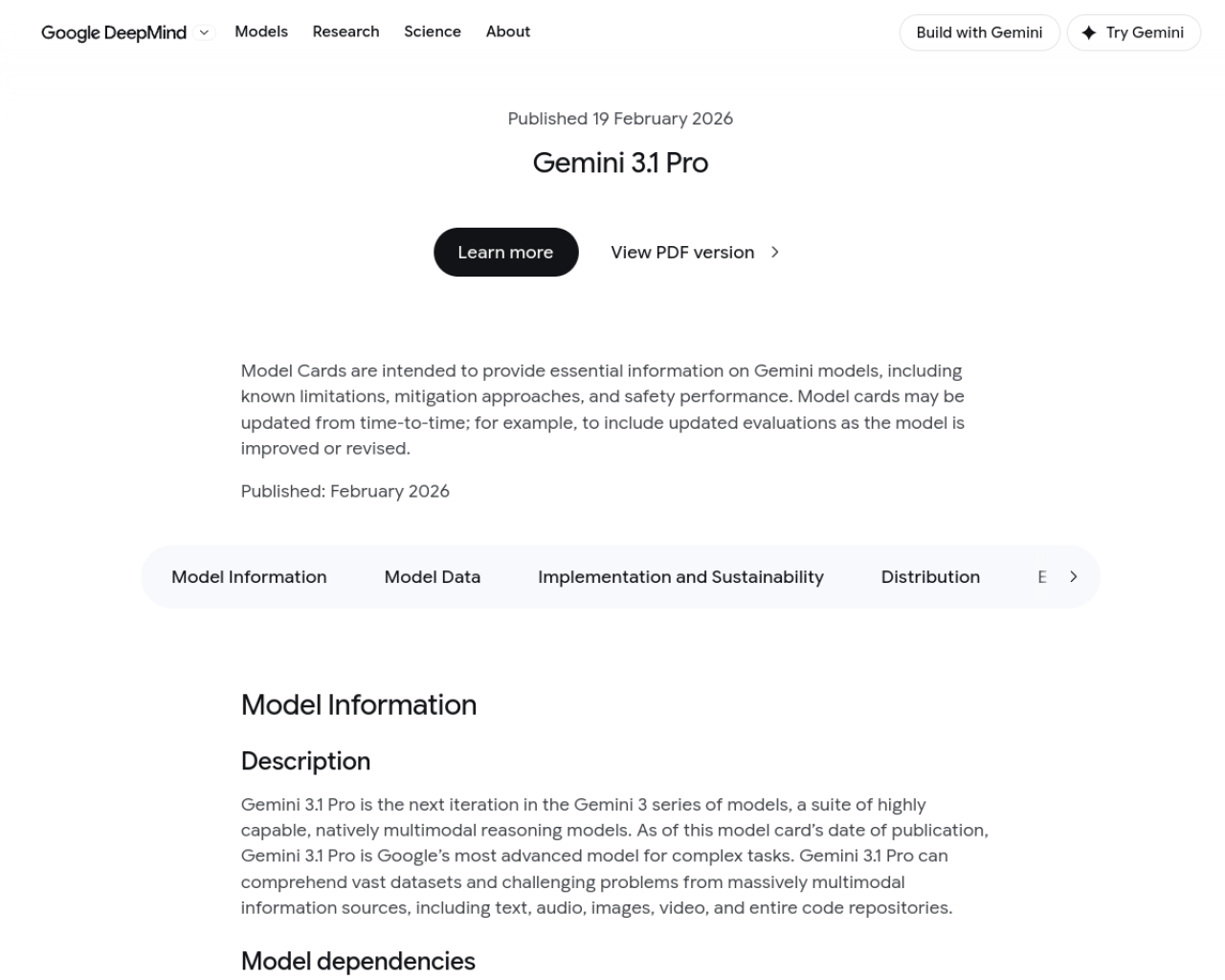
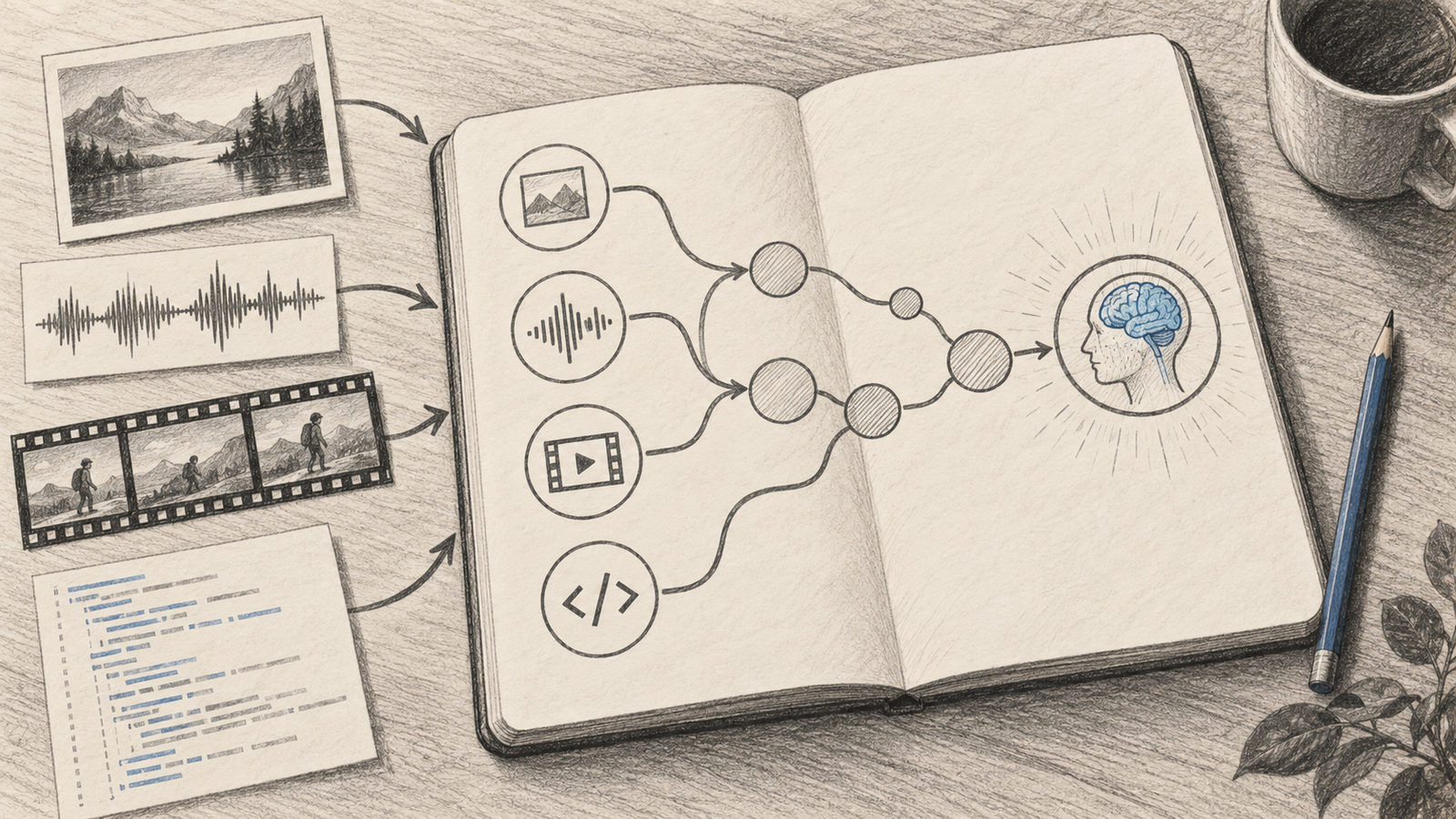
Gemini 3.1 Pro is a multimodal reasoning model from Google DeepMind. Its model card describes input across text, audio, images, video, and code repositories.
That range changes how a task can be presented. Instead of describing a chart, a spoken note, and a code file separately, a user can bring several forms of evidence into one workflow. The challenge is still to ask a focused question and verify the result.
Think in terms of evidence
For a text-only task, a prompt and a document may be enough. For a multimodal task, the model can inspect an image, listen to audio, or reason over video alongside written instructions. A code repository can provide the surrounding context that a single pasted function lacks.
The useful pattern is to provide the source material and ask a question that can be checked. For example, ask the model to identify the main trend in a chart and cite the values it used, or to summarize a meeting recording and distinguish spoken decisions from its own recommendations.
Keep the task bounded
More input does not automatically mean more accuracy. A large repository or long recording can include irrelevant material. Tell the model which files, time range, or visual region matter, and request evidence for important claims.
The official model card is also a reminder that model descriptions include intended use and limitations. A model card should be read as a snapshot of documented behavior, not a guarantee that every task will work equally well.
A basic review method
For code, run tests and inspect the proposed change. For video or audio, compare the summary to the source around names, numbers, and decisions. For charts, verify the values and axes. Ask for uncertainty where the input is ambiguous.
Gemini 3.1 Pro is most useful when a problem genuinely spans modalities. If the task is simple text extraction, a lighter workflow may be easier to inspect. The goal is not to use every input type, but to give the model the evidence it needs.